|
Reflections 2026
Series 2
March 23
Childhood Travel - To Europe at 17! - Academia V: Queens College I – Ace High?
| | Childhood Travel In recent postings I've gotten autobiographical, particularly in regard to Academia. I showed how Brooklyn Tech got me started with German as my first second language. But here we talk about both language and travel, so we need to add the amazing opportunity that fell into my lap as a teenager, getting me started with international travel. That was a fabulous experience, but let me lead up to it. There were two other trips to talk about first. One involves a milk train, the other a former car ferry and a bridge whose name is by far the most memorable thing about it. | | | | Otisville Farm We were never a traveling family, so it was unusual that, when I was perhaps four years old in 1944 during the war years, I spent a summer with my mother on a farm near Otisville NY (I never saw Otisville itself). We must have been living on Pennsylvania Avenue in East New York. I doubt my father could afford a car in the 1930s, and car production stopped in the war years, to say nothing of gasoline rationing. Thus, my father would visit us on the weekends, traveling "on the milk train", and I have to assume that's how my mother and I must have gotten there and back in the first place.
It was not your usual resort. It had ethnic connections. The farmer was Russian-American, and my mother must have learned about it thru friends and family, some of which also joined us for a few weeks that summer. The farm was near the town of Otisville in Orange County, about 110 km (70 mi) from NYC.
https://www.pickocny.com/wp-content/uploads/2021/09/oc-destinations-map-lg.jpg
On this tourist map of Orange County, NYC is down the Hudson at the right. Look to the left, where New Jersey lies to the south, and Pennsylvania peeks in from the west across the Delaware River at Port Jervis (click). Follow the red railroad tracks north, and Otisville is the previous stop. The dashed red lines are current railroad tracks, and the dotted blue ones are former ones (possibly milk train routes), but these are currently hiking trails. Of course, I remember none of this—it's mostly current research.
I was here again in 2011—see 2011/4 "Port Jervis"—but it was to check out the Port Jervis line of Metro North, which runs thru NJ. I believe I was totally unaware at the time of the train stopping at Otisville.
http://uscities.web.fc2.com/ny/information/maps/images/maps/metro-north-map01.jpg
But let's start with that more recent visit, and try to reconstruct the childhood one. I made my way to Hoboken, and you can see how the line belongs to NJ Transit up to Suffern, and then to NY's MTA beyond that. However, it was all once the mainline of the Erie Railroad, which was opened in pieces to Port Jervis in 1848. I now learn that the Erie Railroad played a pivotal role in Orange County, transforming the region into a major dairy supplier for NYC after the first rail milk shipment in 1842. In the US, milk trains ran from the countryside to cities making numerous stops at minor depots to pick up cans of fresh milk, making them a colloquial expression for a very slow train, but they provided a necessary service. They also carried mail and express packages. Most milk trains were mixed-use trains that combined several milk cars with passenger coaches, mail, and baggage cars. Sometimes they even had flag stops to pick up passengers.
https://www.railfanguides.us/system/erie/1944c.jpg
This is a map of the Erie Railroad Mainline dated 1944, the very year I believe might have been our Otisville summer. It shows how it ran all the way to Chicago and other major cities. Click on the right and you'll find Port Jervis, and even Otisville (!), right on the mainline. Beyond that, find Susquehanna, Pennsylvania. Next we have a westbound Erie RR timetable between NYC and Susquehanna, tho it's earlier, from 1919. Parts of it make reference to sleepers to Chicago et al. Peruse this to wonder which runs might have been milk trains.
I now have a better idea of my father arriving on weekends on the milk train.
By 1960, the specialized rail transport of milk, once a staple of the industry, was replaced by highway tanker trucks. Many of the lines that once served as dairy routes, such as parts of the Erie Railroad in Orange County, were abandoned or converted into trails by the 1980s. Thus in our reconstruction, we have to consider both the red and blue routes on our map.
On the farm in Otisville, it was mostly women and children during the week in private, rustic cabins. However, I remember a common kitchen, where each family prepared its own food. Life on the farm included sitting around in Adirondack chairs and socializing. I also remember going down the road to pick wild blueberries.
However, not everything was ideal. A major diversion was when I would go over to the barn when the cows came home in the late afternoon for milking. Cows are big animals, even when located next to an adult. A herd of cows marching along next to a small kid was actually quite scary. And on the farm, kids learn about death. I remember standing outside the barn once and saw the farmer pick up a chicken and strangle it on the spot. Also, there was a cute calf I grew fond of. When I learned they were going to slaughter it the next day I was despondent. That was my life on a farm.
| | | | Chattanooga Going away on a long-distance overnight car trip was something I never would have expected. I suppose it started with a love of geography showing itself even in elementary school. I talked in 2025/4 ("The Postcard Adventure") about how, perhaps in the 6th grade, someone told me about sending penny postcards to chambers of commerce in state capitals and being thrilled getting brochures from far away. I also mentioned fleetingly my first domestic long-distance trip, a family drive to Chattanooga, Tennessee to visit relatives in early April 1953, when I was 13. It's worth elaborating now on that reference.
It was Easter week. My twin sisters and I took two pre-holiday days off from school, about which I felt quite guilty. This would have been when I was in 9th grade in Junior High, living on Arlington Avenue in ENY. As I look at the online calendar for that Easter, that would mean we skipped school on Thursday & Friday, April 2 & 3, since Easter was that Sunday the 5th. We would have been away until Sunday the 11th, for about 10 days. Allowing two days driving each way, that left a visit for about six days.
As it is in life, things then seemed so normal, yet looking back, they seem so antique. Let's start with my father's car. At some point right after the war he finally acquire a used car, but given the era, it was pre-war, a 1939 Buick sedan. It was black, an extremely common color at the time.
https://cdn.dealeraccelerate.com/volo/2/17807/447794/790x1024/1937-buick-special-4-door-sedan
Oddly, it dated from the year I was born. I've never been a car fan, and know very little, but I could recognize the above picture from the feature that stands out in my mind to this day. Not only was the rear window quite small, it was doubled, consisting of two separate panes with a column in between, which seems unique to me. We kids would sit in the back, and often looked out of these windows. The car had the requisite running boards between obvious fenders. The rear doors opened backwards, and had wing windows for ventilation. The front windows had wings as well (don't even think about air-conditioning). The main windows cranked up and down. Cars of this era had no turn signals. The driver had to stick his arm out the window to indicate turns. When signals became a thing, I remember my father buying a pair and jerry-building their installation. My mother didn't drive--he was always the one to drive us around, including to Chattanooga and back.
As to the route to Tennessee, this was before the era of superhighways, except for the NJ Turnpike, which was completed in 1951, two years before our trip. Otherwise, we'd be using the original US Numbered Highway System, originally completed in 1926, especially US 11, in western Virginia and eastern Tennessee. Typical of how that older system started, major highways would connect one town's downtown to the next one—there were hardly any bypasses. One also drove right thru the downtowns of big cities. Thus, our drive in 1953 reflected how motorists had driven from the 1920s on, until the Interstate Highway System started to be built three years later, in 1956. Today, I-81 parallels the old US 11 we took.
What route would we take? My father didn't belong to the AAA, but had a colleague to did, and he got us a set of AAA TripTiks, all prepared for our route. I understand that today, the AAA will give you a TripTik you can see on your phone, but remember, we were going Old School, back when TripTiks looked like this:
https://d3525k1ryd2155.cloudfront.net/h/404/079/1355079404.0.x.jpg
This is a vintage AAA TripTik for a section of US 80, in the typical spiral-bound booklet form. We may have needed more than one. The AAA had a preprinted strip map for most if not all roads, and they pre-marked your route for you, ending an arrow showing your direction. Click to see the lack of bypasses and how the route went thru the middle of all towns—which were clearly named--including downtown Vicksburg, Monroe, and Shreveport. I was ecstatic when I saw the geographic detail, and immediately became the navigator for my father. I particularly loved the historical tidbits on the side about the places we passed thru.
In retrospect, I see how fitting it was to be in a 1939 car traveling cross-country in the Old School map style of that era of numbered US highways of the 1920s-1930s.
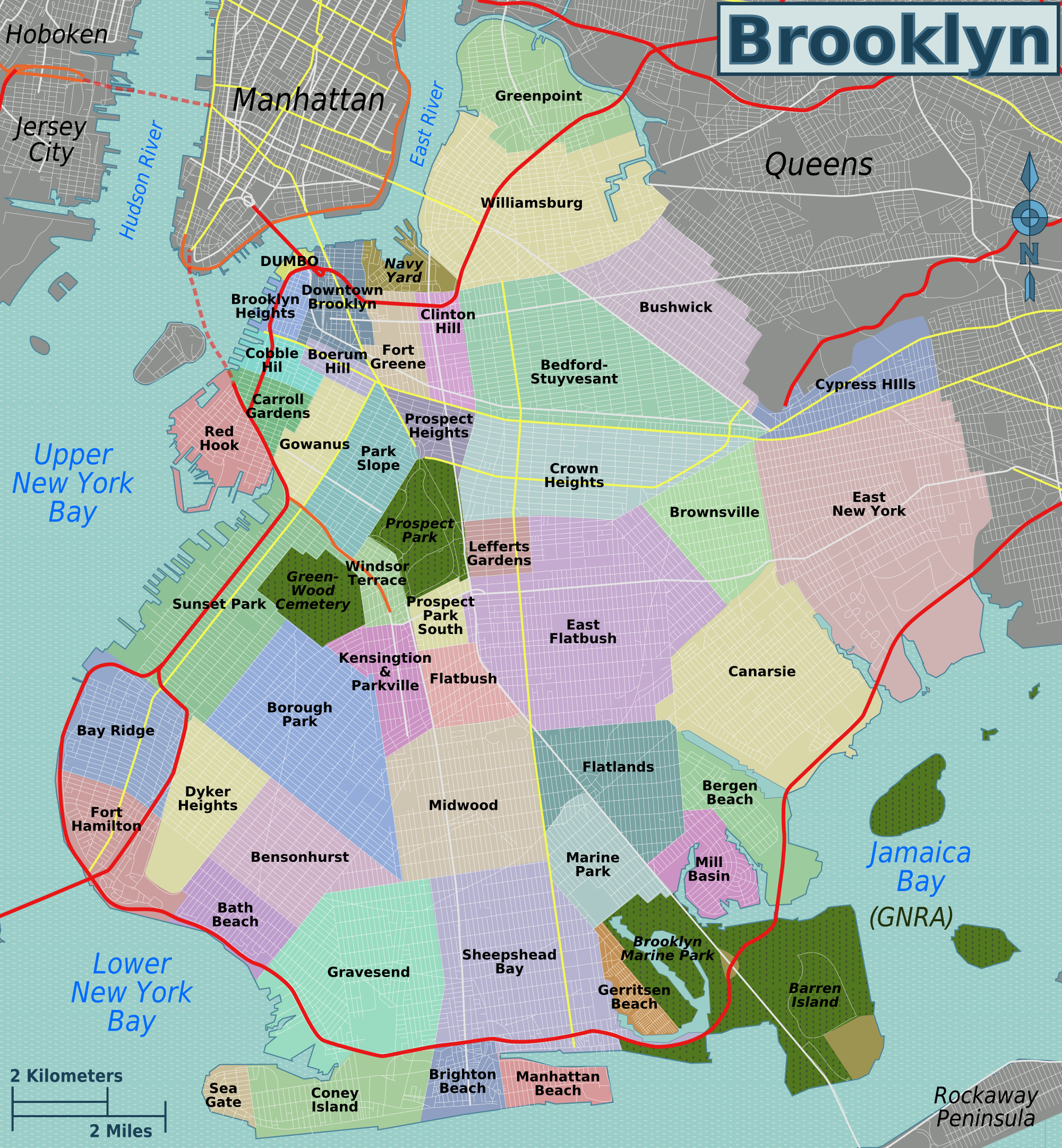
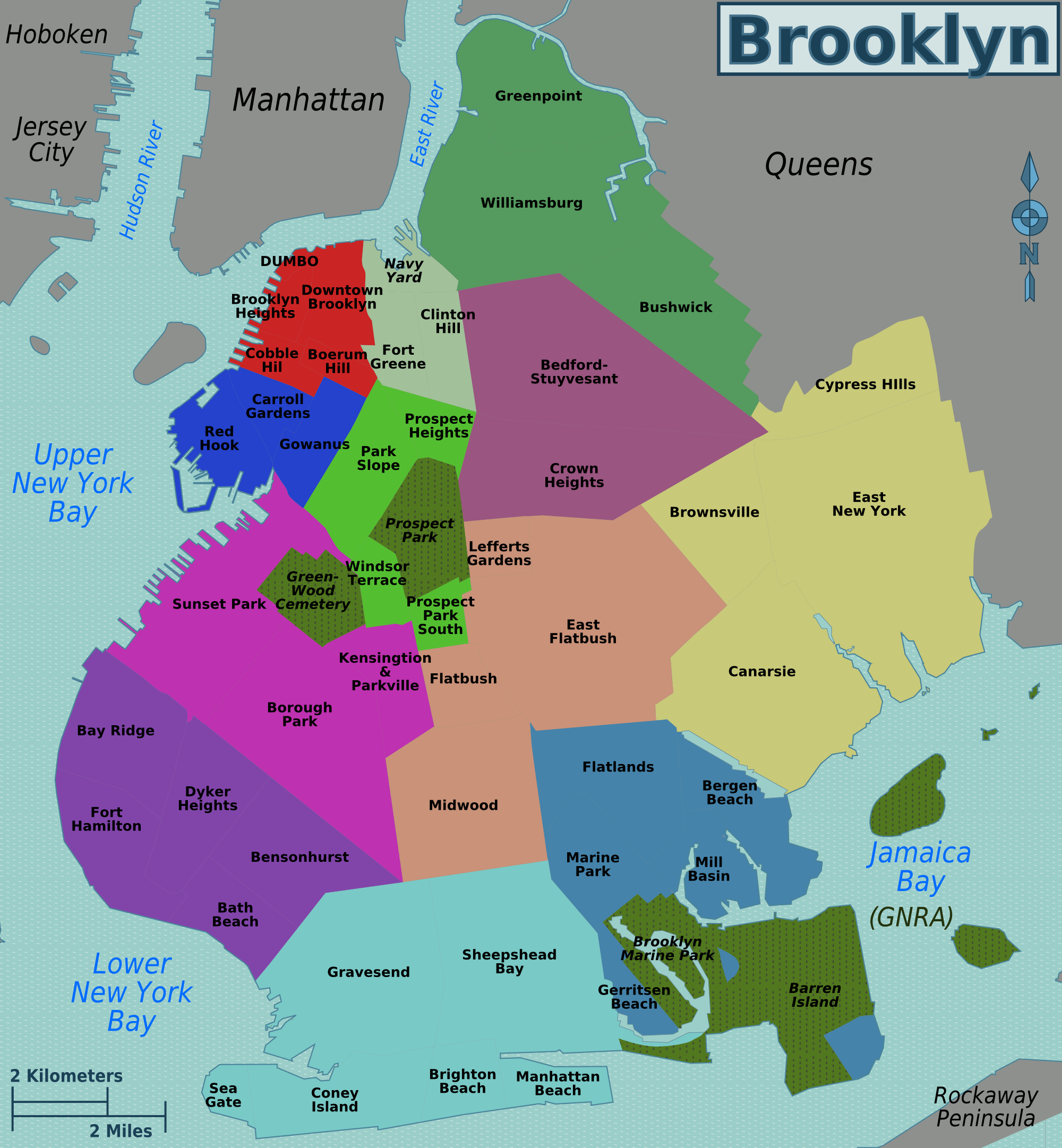
| | | | 69th Street Ferry & Beyond Our route took us across Brooklyn to the former 69th Street Ferry in Bay Ridge, which crossed to Staten Island. Look again at our map of Brooklyn neighborhoods (Map by Peter Fitzgerald). I don't remember our route out of Cypress Hills in ENY, but a good bet would have been westbound on Eastern Parkway, then southwest. Click on Bay Ridge and you'll see the 69th Street pier (unnamed) in dark blue, which still exists.
Today, the term "Staten Island Ferry" refers only to the municipal one described in the last posting dating from the 19C connecting the Battery in Manhattan to Saint George. But in the early 20C, there were two such routes, the second one also connecting Brooklyn to Saint George. It started operating in 1912 and was privately operated, by the Brooklyn & Richmond Ferry Company.
The municipal ferries from Manhattan were double-decked, one being for cars, and had a large capacity for passengers. However, as of Nine Eleven, they no longer carried cars for security reasons, so newer ferries no longer even have car decks.
https://i.pinimg.com/736x/65/8c/a6/658ca6d80a47a2103061ff0a3dd85be2.jpg
Above is one of the former Brooklyn/Staten Island ferries, which were designed primarily for vehicular transport, acting as a smaller-scale, privately-run commuter link. In contrast, the vessels from The Battery were significantly larger, double-decked, double-ended, and built for higher-volume passenger and vehicular transit. The Brooklyn ferries were called Electric Ferries, because they were propelled by diesel-electric motors, state-of-the-art at the time. In Brooklyn I remember cars filling a large parking area in columns, with workers allowing columns in succession board incoming ferries. I'm sure this was the first car ferry I was ever on.
https://i.pinimg.com/736x/d3/c3/80/d3c38007e58a7c8f4113e8d29171ff0c.jpg
This was the wooden pier at the time, and the relatively small ferries crossing the Narrows to Saint George worked off its south side, facing the ocean. Note the signs advertising it as the "Short Route to New Jersey", which was where we were headed. I see this slogan as significant. Why should vehicular traffic westbound from BQ&LI (Brooklyn, Queens, and Long Island) have to cross crowded Manhattan? This was an essential link at the time that formed a southern E-W route across the Five Boroughs.
However, the good times could not last. The 69th Street Ferry ceased operations on 25 November 1964. The service, which had operated for over 52 years since 1912, was discontinued just four days after the parallel Verrazzano-Narrows Bridge opened a little further south, rendering the ferry route obsolete. So now the E-W southern vehicular route uses the bridge, but is still valid.
Nevertheless, the pier still exists. This is a modern view of the 69th Street Pier looking west to Staten Island (left, with Bayonne on the right), now officially called the American Veterans Memorial Pier (Photo by Jim.henderson). The original wooden pier deteriorated after ferry service was discontinued, and a new concrete pier was built in the 70s, then rebuilt in the 90s.
This would seem to be the end of the story, except I felt I had to check something, and to my great last-minute surprise, I find the pier is back in service!
https://images.ferry.nyc/wp-content/uploads/2025/12/09132708/2.OptimizedSystemMap-Local.png
In the last posting, we talked about the new NYC Ferry route as of last December having a stop at Bay Ridge, but I didn't realize until now that this new stop is right at the 69th Street Pier! Thus the pier is connected with Saint George once again (tho for passengers only) after 62 years, which means there had been service for 52 years, none for 62 years, and as of December, service once again. So what goes around, comes around, as history repeats itself.
We landed in Staten Island, probably my very first time there. This map dates to 1947, close to our 1953 trip's date. Click on Saint George, and you'll see the connection to Manhattan as well as the Electric Ferry to Brooklyn. (You also see a certain municipal ferry to 39th Street in Brooklyn which apparently operated from 1906 to the mid-1940s.) Our route across SI was diagonal, probably the longest way to cross SI, and much of it was along Victory Boulevard, starting around that park.
You may remember that Tottenville, at the southern end of SI, is the southernmost point in NY State, and that's where we were leaving the city from. However, while this map shows the two bridges in the north, it doesn't show the one we used, which was built in 1928, so this map is older than we thought. The most unusual thing about the bridge we used by far is its name, Outerbridge Crossing. What imagery comes to mind when you see that name?
file:///C:/Users/Vincent/Downloads/best-areas-by-high-price-tottenville-staten-island-ny.webp
Here we see Tottenville, the southernmost point, and to its north, Outerbridge Crossing over Arthur Kill to Perth Amboy NJ. So what do you think the name of this bridge implies? Wrong, just as wrong as I was at the time, until I figured it out somewhat later. Outerbridge Crossing was named for Eugenius Harvey Outerbridge, the first chairman of the 1921 Port of New York Authority (since 1972 insert "and New Jersey") and a resident of Staten Island. Because calling it the "Outerbridge Bridge" would have sounded redundant, it was labeled a "crossing". Nevertheless, people—including me at the time—have attributed its name to the fact that it's the most remote bridge in NYC and the southernmost water crossing in New York State.
https://east-usa.com/images/northeast_yo648cpj.jpg
Use this Northeast map (click) for the next section of the drive. The green road heading southwest is the NJ Turnpike, at its end, crossing the Delaware River just south of Wilmington DE over the Delaware Memorial Bridge, as seen in this period postcard. This was a particular thrill for me, since it was like entering the long-distance America of those penny postcards. NJ was a neighboring state and part of the NY metropolitan area, but this was actually Delaware! Then Maryland!
While that view showed just the original single span we experienced, for an accurate update, the bridge has since been twinned. These are the modern double spans (Photo by Glenn Petrucci). The older (southern) span that we crossed is closer, and opened in 1951, just two years before our trip. The second span opened in 1968.
The Northeast map shows that we had to drive right thru downtown Baltimore, then right thru the tourist center of Washington (the Capital Beltway, avoiding the city, was built from 1957 to 1964). I remember being overwhelmed, not so much that we were seeing so much (very rapidly), but because we were skipping it all! I got a vague promise from my father that we'd see a bit more on the trip back. We then went west across Virginia. I don't remember what we used (US 211?) to connect to US 11, perhaps south of Winchester at New Market.
https://www.mapsofworld.com/usa/highways/maps/us-highway-no-11.gif
This map then shows that perhaps 2/3 of the trip was on US 11 thru Virginia and Tennessee, ending in Chattanooga on the Georgia border. (On a historical note, this is US 11 in 1926 when it opened as part of the initial US Numbered Highway System. It shows New Market.)
Perhaps the best memory of this latter part of the trip was seeing the forsythia again and again (Photo by Marc Ryckaert). I'd never noticed it in New York, but seeing the bright yellow, my favorite color, against the darkness of the bare trees—like in the picture—was a pleasure every time we spotted a bush. To this day, every spring when I see forsythia in New York it reminds me of that trip.
On reaching the relatives in Chattanooga Aunt Julia and Cousin Gary, three things come to mind. Gary's paternal grandmother lived just south of Chattanooga and over the state line, in Rossville, Georgia, so I added one more visited state to my tally. Years later, I made it to all US states and Canadian provinces. Second, the only real sightseeing we did was to ride Lookout Mountain Incline, a funicular up a local landmark as seen on this postcard, to the spectacular view of the city from Point Park up above. The third item might seem trivial, but I learned to ride a bike. Julia's house was set back from the road, and she had a longish sloping driveway, so I took Gary's bike and coasted down the driveway, not pedaling, but legs akimbo for balance, just to get the feel of riding. Once I got used to that, I started to pedal. I mention this because bike coasting will be of importance when we discuss Switzerland shortly.
The final item was a gross disappointment at the time. When we were back in the center of Washington, again missing visiting all the monuments, to assuage me—we had to get going home--my father drove up to the East Front of the Capitol Building, the main entrance. I got out and walked up a few steps, then got back in the car. That was it. Of course, I visited Washington quite a few times in later years, including going to language conferences there, but this first time seemed like I was missing so much. But there's one unique thing about what we did. This is the East Front of the US Capitol in 1964 (Photo by Chris Light), at a time when cars were not only still able to drive up to the steps, but also park there. After this time, because of reasons of security, only pedestrians can approach the building, so what we did was indeed unusual after all.
| | | | To Europe at 17! I would have felt that a domestic cross-country trip was as far as I'd ever go. Crossing the Atlantic to Europe was something only rich people did, right? But to my great surprise, just four years later an incredible opportunity opened up for me, one that changed my life as much as starting to study languages did.
For this I have to refer back once again to SD, the acquaintance I got to know in the junior high SP classes, and who also was the only other one from that group at my Junior High who moved on to Brooklyn Tech. Actually, his choosing Tech over Stuyvesant--we were both accepted to both--led me to pick Tech as well, and his family knowledge of German led me to pick that over the only other choice, French. Still we were just well acquainted, not close friends. I'll mention again that it was well-known at school that he went with his parents every summer to Europe; his father was an importer-exporter, so it was business in addition to visiting family and sightseeing. At least some of us knew he was born in Tangier. Tho I never plowed deeper into the family story, his parents fled Europe with Mrs D pregnant, and she gave birth en route in Tangier, northern Morocco. You'll recall that I've compared the little I knew of their story to the film "Casablanca", which told of the city further south in Morocco where refugees from Europe fled, hoping to reach America. But people just understood it as a quirk that SD went regularly to Europe, just as if you knew someone was related to a celebrity.
I've always pictured the following trip as a high school event, because it started there. Actually, it took place after we'd already started college—in reality, it overlapped the high school/college transition.
People who go to a neighborhood high school can easily get together with school friends at their homes, but that doesn't work at a specialized school like Tech, which draws students from across the city. After school, several of us just hung around the building, notably in Tech's spacious lobby.
https://lh3.googleusercontent.com/-Vq0xont5wDA/VXBbIEog_jI/AAAAAAABPqU/0xCt23ae4Ik/s540/IMG_0118.JPG
https://surveybths.com/wp-content/uploads/2023/12/8744718_ZXhetfA1rQYDweQiceXHIJ-bqX1tUMtat3TH4csOEcY.jpg
Brooklyn Tech's lobby features a large, monochromatic ochre mural depicting themes of industry and education, as shown in both of the above photos. It was completed in 1941 as a project of the federal WPA (Works Progress Administration). NYC owns it and is required to preserve it as a historic landmark. It's centered above the large (unused) fireplace in the second photo.
https://cdn.rothbraderfurniture.com/wp-content/uploads/2022/11/18105954/3623-oak-high-back-bench-1.jpg
However, back in the day there used to be two huge wooden high-backed oak benches set up perpendicularly on the left and right sides of the fireplace. They were wider than in the above photos, but you get the idea. This was an ideal cozy place for several of us to socialize and start our homework after school. These benches at the unused fireplace in the Tech lobby is where my international travel history started, and I remember it well. Put another way, HIC LOCUS EST / This is the Place where my international travel started.
I have to also remind readers of our lopsided schedule. Tech was set up for grades 9-12, with a very full curriculum. However, those of us who'd had grade 9 in junior high were at a disadvantage, having missed out on requirements of Tech's grade 9. So instead of spending three years (six semesters) in high school, our JH group spent 3 ½ years (seven semesters) to catch up, so we graduated in January (1957). This also set up our college years to follow that pattern, so we graduated from college in January 1961. That's why I had a half-year "free" in spring 1961 and worked on that clerking job for a brokerage house right on Wall Street. This later led me to finding that translating job for AmEx on Lower Broadway, and got me eventually to be interested in living in Lower Manhattan. It's all connected.
Back to SD and the lobby. It must have been in the fall of 1956, some months before graduation, when, as a bunch of us were doing homework and chatting on those lobby benches, SD suddenly asked if anyone would be interested in going with him around Europe the following summer, 1957. We were all dumbfounded at the question, but four of us said we'd think about it.
After some time, one by one, three of the four dropped out. All but me. I will be blunt. I think SD was closer to the others than to me and would have preferred if one or several of them was interested. But I was the only one interested, willing, and available. SD and I must have discussed finances, and I realized that the bank account I'd been building up at the East New York Savings Bank in elementary school (see 2025/4 at the end) would be a good start, plus an addition made by my parents, so apparently not only rich people could go to Europe. We graduated from Tech in January and SD went to Columbia, while I went to Queens College (more later), with plans to go to Europe that summer, 1957, after one semester of college. This is how this trip overlapped the high school and college years.
I'd been to SD's house in Midwood, Brooklyn (near Brooklyn College) several times, due south of Tech in Fort Greene, tho as I reflect back, he never did come to visit me way out in Hollis (Map by Peter Fitzgerald). But that spring, my father drove my mother and me to Midwood to meet the D family, which went very well, and plans continued. They would arrange the crossing on the Queen Elizabeth, and explained to me how to get a passport.
| | | | Sailing Away We'd be sailing both ways on the RMS Queen Elizabeth (completed 1940). For details and a picture, refer to my ship summary at the end of 2013/7, since that trip covered my sea voyages #1 and #2. You can scroll down and see all the occasions I spent overnight in a ship's cabin from over seven weeks around South America to some trips of just one or two nights. The total you'll find is 64 voyages, tho the last four shown have not yet been written up on the website.
Modern passenger ships are really quite democratic. There are more expensive cabins that might be considered First Class, but everyone usually has the run of the ship. There's often a common lounge and common dining room, tho some ships might have a separate First Class dining room, tho this is a generalization.
Now forget that. Cunard's RMS Queen Elizabeth of 1940 represented the traditional division of classes from the Golden Era of sailing. It was totally segregated three-ways, to a First Class, Cabin Class, and Tourist Class, and everyone was to keep to their designated area.
| | | | | | The ship's name causes confusion. It was NOT named after Elizabeth I (Tudor), and in 1940, Elizabeth II was still a 14-year-old princess. It was named after her mother, Queen Elizabeth the Queen Mother, the wife of George VI, actually known in her later years simply as the Queen Mother (Queen Mum). |
| | | | I'm amazed that I've found online a deck plan for the ship (but the link is volatile and might die).
https://thumbs.worthpoint.com/zoom/images2/1/0318/16/rms-queen-elizabeth-1940-cunard_1_5e5fce74fedf6e528573b57b2f1abf2c.jpg
I'll leave it for you to find (click) the three different sports decks up top, First, Cabin, Tourist; three lounges, and three restaurants. To the right of the forward funnel, find the "Tourist Entrance" (and "Tourist Lift") and to the left, the "1st Cl. Ent". I also see a Cabin Swimming Pool. I do not remember separate entrances, but current research says that there were distinct, separate entrances and staircases within each class. Apparently, everything was in triplicate to keep the classes from mixing. On reflection, this is really amazing, but I lived it.
I need to modify that. SD had been on the ship a number of times, and it was his playground. We were in Tourist Class, and were assigned to dine there, but otherwise, SD knew where the service staircases were for staff. We used them regularly and shamelessly, and ended up having the run of the ship, spending a lot of time in the First Class Lounge. That's 17-year-olds for you.
The crossing lasted about six days. We knew we were to disembark the following morning, and were hanging out in the First Class Lounge, as usual. Then suddenly, at about 9 PM, something strange happened. Engine vibration perceptibly stopped. Movement stopped. What was wrong?
Many of us ran out on deck to see that we'd arrived in Cherbourg this evening before the actual disembarking and were at the dock. It was pitch black, except for very tall lampposts with floodlights on the pier, lighting it. There were longshoremen on the pier, tying us up. Then the realization hit me. This pier was in France! We were in Europe!
To my mind, the strangest thing was that the workers were shouting to each other in French. How could that be? French is a school subject. They just as well could have been shouting in algebra! Some films are also in French, with English subtitles. Or some posh headwaiter might say something in French. But people on the street? And humble laborers at that? Who taught them French? These were not actual thoughts, but impressions of what I so suddenly was seeing, my first impressions of France and of Europe.
| | | | To Paris The next morning we dressed to disembark, and I mean that literally. Today one dresses casually for travel, but this was still the end of a more formal era. We put on jackets and ties, and white dress shirts. That's the basis for my strongest recollection of getting to Paris. As I've told in the past, this was still the era of the boat trains, meaning we stepped off the ship and right into a train on the pier next to it to go to Paris. And these were not modern trains with air conditioning. It was hot, and we opened the windows of the compartment for ventilation. But since a steam engine was pulling us, puffing smoke into the sky, tiny black cinders would find their way into the compartment. I remember the little black flecks on my white shirt.
After about four hours, we arrived at the Gare Saint-Lazare and made our way to the Grand Hotel, where the family had apparently stayed in the past. When SD and I got settled in to our room, for me, by far the most memorable event again involved French. We were on the south side of the hotel facing the Boulevard des Capucines (Nasturtium Boulevard), and across the wide street on top of a building was a neon sign advertising Gitanes cigarettes, in the style of this period ad from the 1950s (Photo by Museum Rotterdam). However, the sign added below avec ou sans filtre. Those four words electrified me, simply because, not speaking French, I understood them. The context made it clear that they were available "with or without [a] filter", and I understood the words directly, without any need of translation. This is how "new" language often works, by context, and so, not yet 24 hours after being impressed by hearing longshoremen actually speaking French, I understood a French phrase without translation. The feeling was exhilarating.
| | | | | | In 2005, two years short of a half-century later, I decided to splurge and stay at the Grand Hotel for a second time.
https://www.gralon.net/plan-ville/cartes/planr-place-de-l--opera-paris-3988.jpg
On the map above, the Grand Hotel, dating from 1862, now the InterContinental Paris le Grand, fills the almost-triangle on the left. SD and I had been on the south side, on Capucines. Checking in in 2005, I told the clerk of my almost half-century history with the hotel and wondered if I could get a room on the east side. He was duly impressed, and I found myself in a room on the Place de l'Opéra, one flight up, with the Opera House, now called the Palais Garnier after its architect, on my left.
If you refer to 2017/17 "Previous Paris Visits", you will see that these two visits to the Grand were part of my 1st and 7th visits, but all my 8 stays there were parts of longer trips. That entry doesn't include the time I just passed thru Paris connecting between railroad stations, coming in from the Channel Islands but going right on to Italy.
|
| | | | SD and I stayed a couple of days in Paris on that first trip, but already "free" of his parents. He knew his way around. I remember nothing of what we saw that first time, but do remember Métro tickets, which SD explained how to use. | | | | Paris Métro Then Today, all subways have some sort of electronic card you use to pass thru turnstiles, but it was different then. In 1957, NYC subways were using a metal token costing 15 cents, but more surprisingly, the Paris Métro was using paper tickets! They were the width of a double-wide postage stamp and flimsy, almost like newsprint. You could buy just one ticket, but it was much cheaper to buy a carnet de dix, or packet of ten, a ten-pack stapled together. (These were more French words I was absorbing like a sponge.)
https://www.pariszigzag.fr/wp-content/uploads/2012/08/VISUEL-TICKET-1-ticket-de-carnet-2%C3%A8me-classe-1903-.jpg
The note on the left said to "Detach before presenting" and on the right, "At the exit, toss in the box". But possibly most interesting is that most tickets were for 2nd Class, reflecting the class system of the day also popular on ships. 2nd Class tickets were the above cream color, and 1st Class tickets were rose. As I recall, each Métro train had a 1st class car in the middle, with 2nd class cars fore and aft. People were willing to pay the extra price for less crowding and more comfort. Also, some women traveling alone felt safer there.
https://cdn.paris.fr/paris/2020/12/09/original-2e74cce50220aafa0fcc955edb9d51bc.jpg
https://i.pinimg.com/736x/16/93/79/1693795bc60ed25f7833ad6294ddf842.jpg
The first link shows a period 1st class scene. I couldn't find a photo of a period consist, but the picture shows toy Métro cars imitating a consist. Note the Roman numerals used on the cars, I and II. You'll also note on that ticket the fact that it had been punched. In place of turnstiles, at each station, agents in uniform were located at each entrance to the trains, at least doubling the number of employees required at each station in addition to ticket sellers.
https://www.messynessychic.com/wp-content/uploads/2018/08/kiosk.jpg
I just learned my newest French word. A poinçonneur is a hole-puncher. Tho this agent is in a tiny booth, I also remember agents just sitting on a high stool against the wall, surrounded on the floor by numerous punched holes, fallen like snow. This two-class system lasted longer than you might think—it was finally eliminated in 1991, due to declining usage and a desire for social equality.
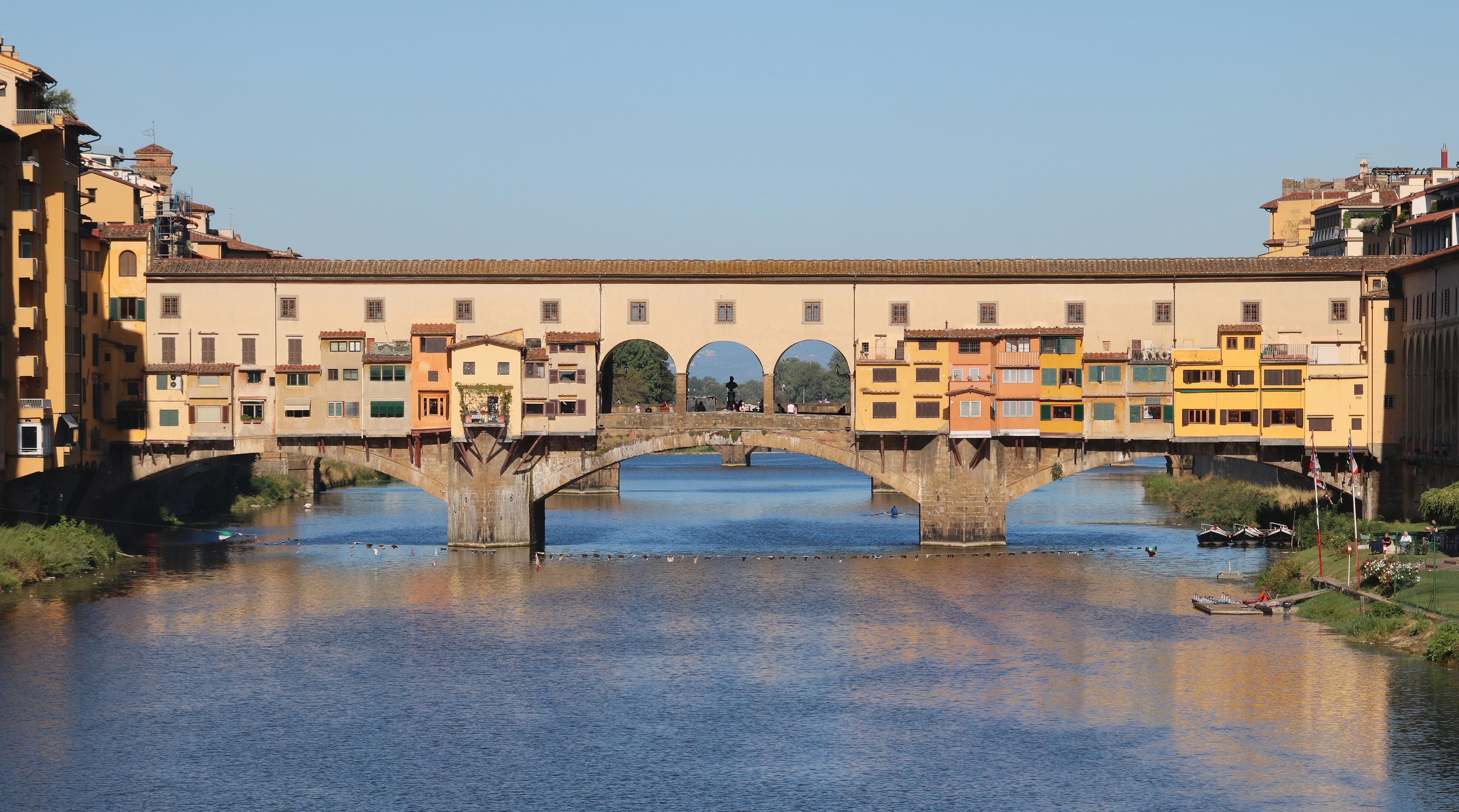
| | | | On Our Own It was then time for SD and me to go off on our own for a few weeks, and at this point, I have to make perfectly clear something that will seem very odd. I was a babe in the woods, and bedazzled every day by all the things we were doing and seeing. In actuality, this was SD's side trip away from his parents, and knowing he was so much more travel-experienced than I was, that was perfectly fine with me. He was the leader, and I was the follower. It seems so strange for me now to point out that I did not know what cities we were headed for. I didn't even know what countries we were going to. Today I prepare my route and research what I'll be looking for. Then, other than for places everyone's heard of, like the Eiffel Tower or the Colisseum, it was learning day-by-day. But we did a good job. It was different, it was enchanting, it was adventurous, and it was even empowering, because I not only enjoyed the trip tremendously, I also realized all that I was learning, both culturally and practically. It's where I learned how to be an Independent Traveler, eventually doing all my own planning and research, and largely traveling by train (tho in later years, I also often used rental cars.) | | | | Florence It turned out that our first stop was to be Italy, and we took the overnight train from Paris to Firenze/Florence. SD's travel style—most likely from his parents—was to pre-plan the route, but otherwise to book things on the go, so we apparently bought just the one train ticket and found a hotel and restaurants on arrival. On that trip to Florence, I remember seeing the medieval Ponte Vecchio (PON.te VEK.kyo)/Old Bridge over the Arno, here looking west (Photo by Ingo Mehling). It's particularly well known because of the shops built along it, today mostly tourist-oriented. You can really see the Arno only from those three central arches.
https://thumbs.dreamstime.com/b/people-walk-famous-ponte-vecchio-florence-florence-italy-april-tourists-walking-famous-medieval-ponte-vecchio-old-bridge-310688414.jpg
Because of all the shops, crossing the bridge is much like walking down any other street until you get to those three central arches, where you can finally see the river.
While I was very good learning its history, it wasn't until a later visit that I learned that that upper row of windows is within the Vasari Corridor, the enclosed, elevated passageway running above the shops. Built in 1565 by Giorgio Vasari for Duke Cosimo I de' Medici, this secret passage connects the government offices in the Palazzo Vecchio on the north bank with the Medici residence at the Palazzo Pitti on the south bank, allowing the ruling family to travel securely above the city streets. (This is one reason I now do my research in advance.)
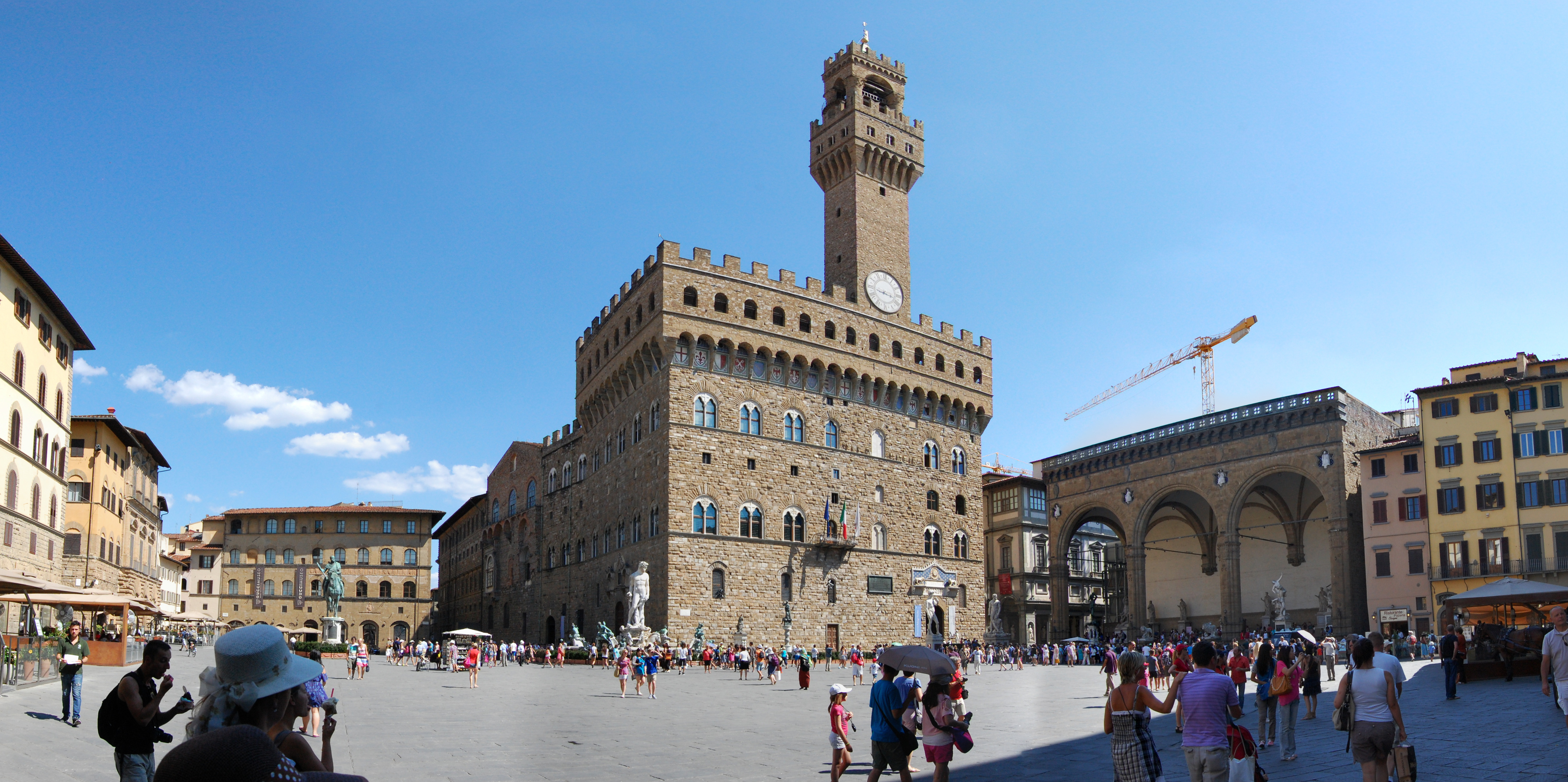
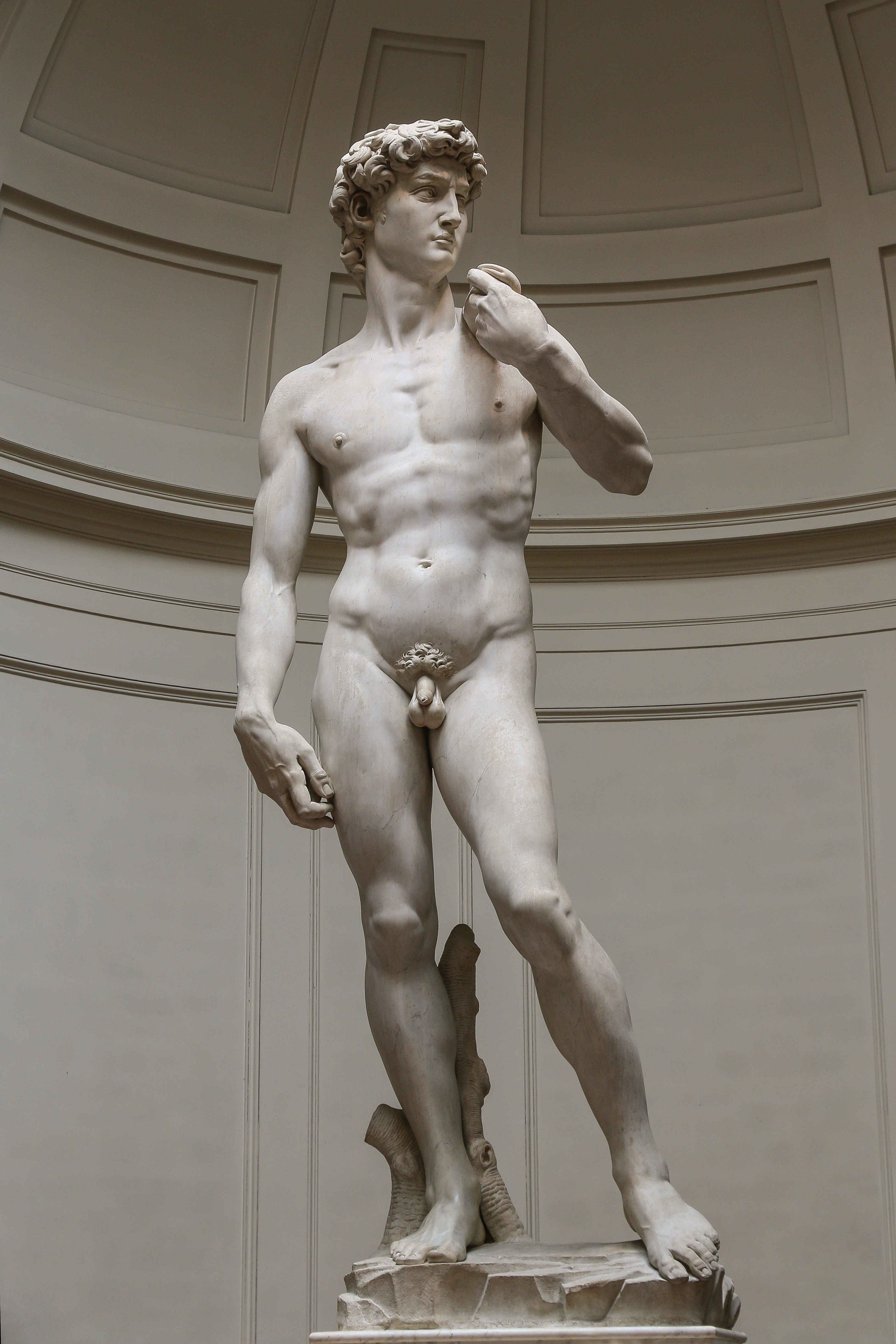
This is the Piazza della Signoria (Photo by Zolli), centered on Florence's Town Hall, the Palazzo Vecchio (Old Palace). Click under the blue entrance. The statue to the left is Michelangelo's world-famous David. Well, sort of. It's what we believed at the time. Only on later trips was I able to look into the matter and found out this was a replica. Because of impending damage due to unstable ground, the original David (Photo by Jörg Bittner Unna) was moved in 1873 to the Galleria dell'Accademia, where I saw it on a later trip. This is another example where earlier research helps.
To the south of the Palazzo Vecchio, right past the David replica, is the Uffizi Gallery, with fabulous art. (The name is archaic Italian for uffici "offices".) The only thing I remember seeing there—and I remember it well—was Botticelli's Birth of Venus, which we did appreciate. However, I later learned it's jokingly referred to as "Venus on the Half-Shell".
| | | | Trains The next train took us to Roma/Rome. I picked up lots of vocabulary on Italian trains. First, each car inside said Ferrovie dello Stato (State Railroads), which was not hard to figure out. Then there's the windows. As with French trains of that era, there was no air conditioning, so the windows opened. But there was something particularly notable about Italy. Stations had itinerant vendors on the platforms selling sandwiches, snacks, and trinkets, and many passengers would lean out to make purchases. Thus the windows had the warning: É pericoloso sporgersi (stress –lo-, then spor-). This can't be guessed at, but below, the warning also appeared in French and English: "It's dangerous to lean out." We never joined the passengers that sporgersi, so this is the first time I'm actually using that word in a sentence. But years later, when I was studying Spanish, I came across peligroso, and felt that it was easy to learn, because it's like Italian pericoloso.
But my favorite word was a charming euphemism. Today, Italian trains primarily call the toilet the bagno, which is the same euphemism English uses, bathroom. In addition, the English WC (water closet) is often used, in italy pronounced "vee-chee". Some places use the French toilette (twa.LET), and others use the ponderous servizi igienici (hygienic services) a very erudite euphemism. But in 1957, we instead found a euphemism we found odd, and mocked: RITIRATA. Now, after all the years, I see what an elegant euphemism it is; tirare is to pull, to draw; ritirare is to retire, to withdraw, like if a dinner party retires or withdraws to the living room. Thus the ritirata was the retiring room, the withdrawing room, the place you're going to that "isn't where you were". I think that's pretty elegant for a euphemism. But we, who didn't understand the origins, purposely mispronounced it, saying we were "going to the ritty-ratta", thinking we were being so clever and cute. That's 17-year-olds for you: college students mature enough to enjoy Botticelli and Michelangelo, yet immature enough to laugh about the ritty-ratta.
| | | | Rome Our next stop was Roma/Rome. I remember very clearly three things upon arrival, and now, seven decades (next year) after that trip, see that all of three thoughts need adjusting, again illustrating the need for extensive research before departure.
(1) We arrived at Stazione Termini, and I digested both words, as usual. I was sure that, for some reason, the second word was like the plural of "terminus". To check that, I just now did an online word search in Italian (I've gotten better at Italian) about the name, and IA came up with this: il suo nome deriva dalle vicine Terme di Diocleziano, non dal termine del viaggio (its name is derived from the neighboring [Thermal] Baths of Diocletian, not from the end [terminus] of a trip). At least it shows that I wasn't the only one deceived by the name.
https://atouchofrome.com/images/baths/baths-of-diocletian-location-in-rome-of-21st-century.webp
This map shows both the Stazione Termini and the Terme di Diocleziano, but do not be deceived. Each is shown in its own time period. Today, the baths are in ruins, and two churches and a museum are built over some of the ruins. Not being aware of this, SD and I did not know to visit the Baths, showing again how advance research helps.
(2) In between the two (see map) is the Piazza dei Cinquecento, the Square of the Five Hundred. Thus, cinquecento is one of the first numbers I learned in Italian. It's an impressive name, but I never knew over the years who these 500 were. Current research shows they were the c500 Italian soldiers killed in the 1887 Battle of Dogali with Ethiopia, in Eritrea, during a period of attempted Italian expansionism.
(3) It's true, as I learned, that it's very easy to find a hotel in European cities right across from the station, even without a reservation, as we were. But in my bedazzlement (I was in Rome!) I never wondered how we so quickly just walked across to the south side of the square and checked right into one, without any reservation. Only now does it occur to me that SD wasn't finding these hotels. He probably stayed at them with his parents on earlier trips.
He showed me how easy it was to find restaurants, and to manage comfortably in them as if at a restaurant at home. He also got me interested in Gorgonzola (blue) cheese, particularly the creamy Italian Gorgonzola, savored best spread on soft bread (Photo by Peachyeung316). Italian Gorgonzola, from the town of the same name northeast of Milan, is different from American Gorgonzola, which for legal reasons, is prepared slightly differently.
I only remember visiting two places in Rome on that trip, meaning it must have been on later visits that I saw all the rest.
https://atouchofrome.com/images/baths/walking-path-from-colosseum-to-baths-of-diocletian-in-2025.webp
We walked from our hotel area on Piazza dei Cinquecento to both the Colisseum and the Roman Forum. It was at the Forum that I learned about the quaint Italian custom of closing even the most major attractions so the employees could have their lunch, given the power of Italian labor unions. (Today, only smaller, provincial museums close for lunch.) As we bided our time at the entrance, waiting for it to open, one of the most educational and memorable experiences of this trip occurred.
A street vendor walked up to us and displayed a book he was holding, flat, as tho it were on a table. He lifted the cover and inside was a map of all the buildings of the Roman Forum that we were standing in front of. But the map consisted of a number of see-thru plastic layers, and as he lifted the first one, 20C buildings disappeared. Other periods followed, and when all the layers were removed, only the buildings of the original Forum remained, in their original state.
I can only compare it to the map-before-last showing both the station and baths. But that map was a lie, making it look like both were contemporary. To make it like what the vendor showed me, the first layer would have all been modern, like the last map, and lifting it would have removed the station and museum. A later layer would have removed the two medieval churches, and the last layer would have had the area around the baths as they were in Ancient Rome. (On this map, concentrate on the darkest pink area, where the Thermae Diocletiani are at the top, and the Amphitheatrum Flavium [Colisseum] is below, with the Forum Roman[um] labeled to its left.) What the vendor showed me would be like transitioning between the last two maps, but in layers. While I wasn't interested in buying his book, this short interlude got me to realize that, while history, which I'm very interested in, flows in a continuum, it's necessary for best understanding to break it down into layers, especially when viewing urban areas. That not only included the forum we were about to enter with modern buildings around it, but also where I live in Lower Manhattan. To this day, I mentally lift layers to remove later centuries and reach the Wall Street where Washington took his oath of office in the 18C, then remove another layer to imagine Dutch Wall Street a century earlier.
| | | | Venice Out of Rome, we did a day-trip to Napoli/Naples and back, and afterward took the train to Venice. After the breathtaking arrival across the causeway, we arrived at Stazione Santa Lucia. Now I suppose that newbies to Venice can figure out for themselves how to proceed, but it added to our amazing arrival when SD just breezed over to the edge of the Grand Canal outside the station and got tickets on the vaporetto ("little steamer" = waterbus) that got us to Piazza San Marco/Saint Mark's Square. It was the sort of gesture that gained me confidence to travel internationally.
I remember next to nothing of the Centro Storico / Historic Center on that first visit to Venice. My principal memory of Saint Mark's Square is a bandstand in the center where evening music was played for café patrons and passersby. However, AI disagrees with me, saying that today, small groups of musicians go from café to café, and that's the way it always was. While AI is very helpful in research, I do know what I saw.
The only other famous site I remember from that 1957 trip was the Lido. SD really wanted to go to the beach, so we took a vaporetto to the Lido and splashed around in the Adriatic, the only time I did. However, that did result in the only souvenir I retain from that entire trip. I picked up two tiny seashells, each slightly larger than a thumbnail, and, back at the hotel wrote in ink LIDO 1957 in each one, for my only tangible object brought back from that trip.
On leaving, I learned another new word. Outside the hotel, SD surprised me by suddenly shouting inexplicably at full voice facchino!!! (Say fak.KI.no.) it turns out it's the word for "porter" and a guy appeared out of nowhere to help us with our bags (for a fee). Who would ever have thought you could do such a thing?
| | | | Vienna Our next overnight took us to Austria, specifically to Vienna, one of my favorite cities, but on this trip, I saw absolutely nothing of the city. We arrived at the Westbahnhof and were met by SD's relatives—I remember aunts and female cousins. We didn't see the city--it was all a family visit. SD spoke German with them, and I, despite three years of German, was tongue-tied (Middlebury settled that, years later).
I wish I knew more of the D family's background. It might seem they had fled Vienna, but having relatives there after the fact, while a good indication, doesn't prove it. Another clue is that SD said we would not be visiting Germany because of its history. Because of the 1937 Anschluss, many Austrians claim they were the first country to be victims of the Nazis, so maybe that indicates some Austrian heritage.
| | | | Interlaken An overnight train west to the German part of Switzerland took us to Interlaken, with its famous view of the Jungfrau (Photo by Kenwbar). SD said this would be a few days of smaller-town relaxation. I remember three events. First he showed me now to take the trains up to the Jungfraujoch, which I repeated twice on later trips.
https://image.jimcdn.com/app/cms/image/transf/dimension=843x10000:format=jpg/path/s8a51201b1968460f/image/i201c57db3b3fba16/version/1564417527/jungfraujoch-top-of-europe-route-map-options.jpg
The Joch (yoke) is the low point next to the Jungfrau. You can go up or down via either Grindelwald or Lauterbrunnen, but have to change trains at Kleine Scheidegg for the train that enters the mountain tunnel.
Second, we went to the Kursaal (Photo by Leonhard Lenz). While it had opened in the mid-19C as a spa (the name breaks down to "cure-hall", today it's a conference center with a noted casino. We spent some time watching the game of Boule (French for "ball"), similar to roulette. The croupier rolls a rubber ball around a large bowl-like surface in a large arc, and bettors wait to see which number it ends up in in the center. We just watched we did not bet—I never do. Most interesting to me was that the croupier called out directions in French, which I absorbed like a sponge and remember to this day. Each round started with Faites vos jeux, literally "make your bets", but in good English "place your bets". As the ball slowed down, it was Rien ne vas plus! "nothing [goes] more" or "No more bets!", also Les jeux sont faits "bets are done" or "no more bets". To my consternation, AI now tells me that the game is no longer played at the Kursaal, with its room repurposed. While I don't remember seeing any other games back in the day, I understand now there are slot machines, roulette, blackjack, blah, blah, blah. Times they are a-changin'.
One more memory. We then went and sat in the Kursaal garden for a while. By chance, someone had left a copy of the International Herald Tribune on the bench, which I picked up to find that Oliver Hardy had just died. It was a shock, since at age 17, one doesn't expect to see famous people gone. I see now that he died on 7 August 1957, so I can establish that we were at the Kursaal the next day.
The third thing we did, as SD put it, was just for fun—and was so typical for teenagers. It was something he had done in the past with some other friend. We took the train to Grindelwald (see above map). We didn't look around the town, but took advantage of a service the railroads have, renting bikes.
| | | | | | A Swiss quirk: I had learned the German word for "bike", Fahrrad, often shortened to Rad. However, since the end of the 19C, Swiss Germans have instead used the word Velo, taken from the French vélocipède. It's one of those things you learn by traveling. |
| | | | We rented a pair of bikes at the station, and left immediately for Interlaken. Given that the road went downhill for 20.3 km (12.6 mi), we hardly pedaled until the end (I wouldn't have had the energy). We coasted, which was the whole point. I just checked, and it seems to have lasted just under an hour, which sounds about right, and I must admit, it was exhilarating. I now refer back to my learning to ride a bike in Chattanooga, which involved coasting down a sloped driveway. Thus, life repeats itself. | | | | London We took another overnight train to London. In those days before the Channel Tunnel, the overnight train would pull onto a ferry across the English Channel, so it was still a one-seat ride. In London I turned 18, so I can time-check our time there to include 1 September, my birthday. I was apparently a bit older than SD, so I can imagine how, when I was being born in Brownsville, Brooklyn, Mr/Mrs D were preparing to flee Europe with her pregnant, for SD to be born in Tangier.
After a couple of days, we met up with SD's parents, and the four of us took that wonderful boat-train to Southampton Docks, where you literally walked across a few steps from train to ship. The ship for me was the first repeat, so I, too, knew my way around. When we got back to New York, we parted ways to go back to college. We'd enjoyed the trip, but we had never been close friends, so we then lost contact. SD had used me to avoid parental control, but it was also my first time being away without parental control, so I also benefitted. I feel I had the greater benefit. Having a guide my own age showing me step-by-step how to go about Europe was like taking a course in International Travel 101. It gave me self-confidence that would have been hard to acquire by myself. Running around European cities became like running around Manhattan. And eventually, I changed my style, with a lot more planning and pre-booking, so as not to waste travel time. While some would call what we did a Trip of a Lifetime—and it was—it was shortly repeated many times, starting just four years later, in 1961.
I'm in the process of listing my mentors, starting with Dr Bernard at Tech, who got me into German, and I'll have a lot more. However, I have an alternate category. I said Mrs Lindner in 6th grade was an influencer, and I'm going to call SD an influencer as well.
| | | | Queens College I attended Queens College (QC) of the City University of New York (CUNY), and got an outstanding undergraduate education there. Yet, despite all its positive educational experiences, life there was a bit banal. However, I was able to correct whatever shortcomings I found there when I discovered Middlebury College for graduate work, so all turned out quite well. Still, today I tend to get more excited about my high school time before QC at Brooklyn Tech and my postgraduate time after QC at Middlebury College.
On graduating from high school, there was no family college fund and no thought of trying for a variety of colleges, even for a scholarship to one. I suppose the idea was always to go for a CUNY college, and living in Hollis, Queens College would be the choice. In 1957, based on the results of an exam that I don't remember taking in the slightest, I got a modest Regents College Scholarship from the State of New York of, I think, $500, which did cover textbook purchases over time.
All in all, I got a great education from NYC, starting with the AR classes in elementary school, the SP classes in Junior High, Brooklyn Tech, and Queens College. And NY State gave me that small scholarship. But afterward, it was Middlebury in Vermont that rounded out the experience.
Until 1976, CUNY, including Queens College, was absolutely tuition-free, a policy first established by the Free Academy (founded 1847) as a public institution for working-class New Yorkers. The NYC fiscal crisis ended that policy, and now tuition is about $7,500 a year for NY State residents and $19,200 for out-of-staters.
In addition, back then, QC was 100% a commuter school. Dorms were added in 2009 with the opening of the Summit Apartments, its first-ever residence hall with 506 beds, marking a significant shift to offering a more complete campus experience for students. However, QC is still primarily (97%) a commuter school, as only 3% of its students live on campus.
It can thus be facetiously said that, for four years, my undergraduate college expenses (tuition, room & board) involved only my daily bus fare from home. But, despite the financial advantage, I can say today that I sorely felt not having that "complete campus experience". Campus camaraderie was meager; all meals were at home; my laundry was part of the family laundry. That summer in Europe with SD was the only break from living at home until later on, when a string of summers at Middlebury gave me much more independence. Again, as good an education as I got at QC, the banality was finally broken later on by attending Middlebury.
| | | | Commute You'll recall that my early commuting experiences ran along an east-west route between Tech in Fort Greene to the west and Hollis to the east. I was told that QC was "in Flushing", but I had to learn how to interpret that. QC is actually located on Kissena Boulevard in Nowheresville, Queens. As seen on this Queens regional map (Map by Peter Fitzgerald), inasmuch as "Jamaica" is often interpreted as all of southeast Queens (including Hollis), "Flushing" is often interpreted as all of northeast Queens. So QC is nominally "in Flushing", but I never even once saw downtown Flushing until years after I left QC, as an adult.
Believe it or not, my bus commute to QC was a repetitious extension of my commute to high school.
https://files.mta.info/s3fs-public/styles/large/public/2024-12/Web%20Maps2.png?itok=uglPfdaf
Above is the route of the Q2 bus in Hollis. You can (barely) see my 195th Street south of Hollis Station. (1) I had first taken the Q2 via 188th and Hillside to a second bus to Jamaica to take the el connection to Tech. (2) I later took the Q2 to via 188th and Hillside to 179th and the subway connection to Tech.
https://files.mta.info/s3fs-public/styles/large/public/2025-03/Web%20Maps_Q17.png?VersionId=YIoG3gBEfJrpGnI.N_BcIOjPWGtfPzpQ&itok=4ku09EKG
This is now the route of the Q17 bus. Right where 188th reached Hillside, I transferred to the Q17 to college. It ran along 188th, then the Horace Harding Expressway, which is the service road to the Long Island Expressway (LIE). Just before the bus turned onto Kissena (in Nowheresville) was my stop for QC, so I never saw downtown Flushing. Does even just that commute sound banal?
https://images.squarespace-cdn.com/content/v1/57154d604d088e8318875db8/3b6f9318-b634-45e7-91ce-29924432b4b0/Kissena+Park+-+Queens+-+NYC+-+Neighborhood+Map.png?format=750w
Here's a local map. Find Downtown Flushing in blue and trace Kissena Boulevard to the southeast. It passes thru Kissena, with Kissena Park and its lake, nothing I knew about at the time. It bends and, in the orange area, crosses the LIE, whose service roads are Horace Harding Boulevard (not named on map), which is how I knew it. Southwest of this intersection, where I got off the Q17 coming from the east up 188th, you see QC. The map says QC is in Queensboro Hill, a term I never ever heard before, and opposite Pomonok, a name I knew vaguely. I repeat, QC is located in Nowheresville.
However, I now finally learn that Kissena Boulevard is named after Kissena Lake and is one of the oldest roads in Queens, originally a 6.4 km (4 mi) path connecting the colonial settlements of Flushing and Jamaica, known originally as the Road to Jamaica.
| | | | The Campus Then The earliest use on what is now the QC campus is a surprise. The Jamaica Academy was located where the current Student Union is on the southeast corner of the campus. The Central Queens Historical Society was able to find evidence that Walt Whitman taught at the Academy in 1839-1840, as shown by this marker at the site, indicating the original location of that one-room school house (Photo by Nkabouris).
But in the early 20C, there's another surprise. The campus site was occupied by the New York Parental School from 1909 to 1934, an institution for truant and "troubled" boys. This campus included Spanish Colonial Revival style, red-roofed buildings, some of which still stand as heritage buildings around the Quad (see below). Finally, Queens College was established in 1937, two years before I was born. It has expanded ever since.
https://roy.vanegas.org/portfolio/img/a-partial-history-of-queens-college-through-campus-maps.png
I was quite surprised to find online a period campus map of QC in 1962 (looking northwest), just as I experienced it (I attended from 1957 to 1960, graduating in January 1961). The bus stop is just off the map to the right, and the route is down Kissena to the entrance (click) veering left. Thus one comes to the red-roofed heritage area on the Quad. The open area to the left at the bottom of the map was the Walt Whitman site.
We've now arrived at the main administration building, Jefferson Hall (1)--note its Spanish Colonial style (Photo by 49andrewr). Carved above the entrance is an owl, symbolizing knowledge and wisdom (Photo by Nkabouris).
Behind this is the Quadrangle (Quad) around which were a number of other heritage buildings, all lettered. In my time, the set of four around the quad (14, 15, 16, 19) still existed. While 15 is now gone, 14, then called B Building, is now called Frese Hall (Photo by Nkabouris). This is typical of the architecture of this heritage area around the Quad, which dates from 1908 and is Spanish Colonial Revival, featuring low-pitched, sloped roofs with distinctive, semi-cylindrical red-clay barrel tiles, paired with stucco walls and arches. Facing it was E Building, 19, now called Colwin Hall.
https://live.staticflickr.com/5693/19930388784_2d43b1478c_b.jpg
Next came 16, D building (above), on the upper floor of which I had all the German courses I took at QC. It's now called Delaney Hall.
Newer buildings had recently been built before my arrival, but I was unaware of their newness. I'll mention two. Behind F building (14) was the then-new (1955) Klapper Library (13). Named after the college's first president, Paul Klapper, it was renovated in 1992 after the construction of Rosenthal Library and is now called Klapper Hall and now houses the English and Art departments (Photo by Nkabouris). At the top of the map (10) is the also then-new (1958) Fitzgerald Gymnasium, with an Olympic-sized swimming pool.
However, on the first day of school, what impressed me most was visible at the north end of the Quad, where the land dropped down a hillside to reveal, beyond western Queens, an impressive view of the Manhattan skyline (Photo by Kefalos11).
| | | | The Campus Today QC offers undergraduate degrees in over 70 majors and graduate studies in over 100 degree programs and certificates, including over 40 accelerated master's options and 20 doctoral degrees through the CUNY Graduate Center in Manhattan on 5th at 34th. This is vastly, vastly more extensive than the choices offered me back in the day (more later).
There have been many changes to the campus as well since I knew it, which I got to inspect at the time of the class of 1961's 50th Reunion in 2011.
https://www.qc.cuny.edu/a/wp-content/uploads/sites/97/2022/03/Queens_College_2D_Map_2024_fall.jpg
This contemporary map faces west. At the lower right are the bus stops for the Q17, both coming and going, so let's make our way to the Welcome Center. We now see the Student Union, built in 1972, designed to encourage students to participate in campus activities rather than head home after classes. There was something similar elsewhere in my day, but it didn't draw me from going home at the end of classes, making the day just a little more humdrum. It was from here that the academic procession led to the Quad during my 50th Reunion.
Around the older (eastern) part of the Quad, we still see the heritage Jefferson, Frese, Colwin, and Delaney Halls, all in the Spanish Colonial style. Delany for one, with the German department upstairs, was called D Building until 1993. North of Frese is Klapper Hall, which I knew when it was still Klapper Library.
Move up (west) to the level of Fitzgerald Gym, to find the new dorm, The Summit, then Klapper Library's replacement, the much larger Benjamin Rosenthal Library, which I also visited during a reunion (Photo by Faisal0926 at the English-language Wikipedia). It was built in 1988 and named after a congressman representing northern Queens. It prominently includes the Chaney-Goodman- Schwerner Clocktower, named after the three civil rights workers who were murdered in Mississippi in 1964, including Andrew Goodman, a QC student. It features five bells from the Netherlands that chime quarter-hourly, serving as a memorial and a symbol of their sacrifice and the college's commitment to civil rights.
https://qns.com/wp-content/uploads/2019/03/Quad_Skyline-1.jpg
The Clocktower now stands out on the Quad when looking down the hill at the view of the Manhattan skyline. I've never been further west on the campus than this point, but look down the hill at Queens Hall, way over on Main Street, extended from Downtown Flushing. It was originally built as a junior high school, and later housed the CUNY School of Law. But today Queens Hall houses all the many language departments at QC. (I do not know how many languages were taught back in my day.)
There is the Department of Classical, Middle Eastern, and Asian Languages and Cultures (CMAL), which includes Ancient Greek & Latin; Hebrew [Arabic, Turkish, Farsi]; Chinese [Japanese, Korean].
Department of Hispanic Languages and Literatures, which comes down to Spanish, with Portuguese. It has a huge variety of courses, including, interestingly, Spanish for heritage speakers.
There is also a Department of Linguistics.
While the German Department used to be independent, in D Building, it's now part of the Department of European Languages and Literatures, which includes French, Italian, German, Modern Greek, and Russian.
| | | | | | The variety of choices overwhelms me. I hungered for linguistics language history and mostly had to be satisfied with what I found in Klapper Library (which did do me well as far as it went). Two of the language departments include the phrase "and Literatures", which freaks me out, since I suffered back then with having more German and Spanish literature stuffed down my throat than I wanted (more later). But I also see a lot more choice in the modern listings than was offered me.
A summary of today's German courses includes:
Courses in English for Masterpieces, Civilization, Cinema [interesting]
Basic Language Courses, including intensive ones
Advanced Language courses in conversation, grammar, stylistics, composition [which I didn't get until Middlebury]
Civilization courses: art, music, literature, politics, religion in German society [ditto]
Two Introductory Literature courses [which would have helped me a lot]
Elective Courses in Literature: Early German Lit, Enlightenment, Age of Goethe, romanticism, theater; novels, poetry [similar courses were the only ones offered to me, and I suffered; these, happily, are called "elective"]
|
| | | | My Courses I want to review what I studied to show the variety at hand, including what I was very pleased with, and later what I was less pleased with. I will leave three big topics to the end, probably for the next posting.
HISTORY I'd had a great background in history at Brooklyn Tech. We'd been issued an outline of topics to be covered, and the one topic I remember was "The Unification of Germany and Italy". I'd never thought much before that about such late unification, and learning that then stands out in my mind. At QC, four more semesters of history further cemented the earlier ideas. I was very pleased with my history courses, which at QC were called Contemporary Civilization (CC), whose syllabus was borrowed from Columbia University. It strikes me as odd that SD and I were studying the same CC courses in two places.
MATH I'd reveled in math at Tech, particularly plane and solid geometry, but trig, too, and I was delighted to take calculus at QC. Finding the area of a rectangle or circle in plane geometry, then moved up a step in finding the area of a cube or cone in solid geometry, all of which was great fun. But with calculus, one could find the area under a curve, which was a fabulous concept (Diagram by 4C).
The other math course I recall was a required one on Statistics. I appreciated learning about the bell curve, where mu (μ) stands for the mean or average, and sigma (σ) stands for the standard deviation, three in each direction (the spread). 68% of the combined data will lie within one standard deviation in each direction, 95% within two sigmas, and 99.7% within three sigmas. I found much about learning probability of interest, yet vexing. I like to live in a world where two plus two always equals four, not where it might equal four, but with a standard deviation of 1, making the answer anywhere from 3 to 5.
| | | | | | At the time, I never thought of any major other than language, but reflecting back after the decades, it strikes me that history could have been a possibility. Travel writing is primarily about geography, and history comes right along with it.
Outside the humanities, on the STEM side, I might have chosen math, and I also loved physics at Tech. But language, languages, and linguistics still come out first.
|
| | | | PHYSICAL EDUCATION It's odd that I include this topic, since I'm not into sports, nor into athleticism. I favor brains over brawn—but that's just the point. At Tech I suffered thru semesters of Phys Ed, usually trying to hide out in a corner if possible to minimize myself, but the less said about that, the better. At QC, I was first put into a memorable course called Fundamental Sports Skills. Today, I'd rename it Sports for Nerds. I do not know how they determined who got into that class, but all the guys in it clearly came from Nerd City. I remember two things, both of which took place out-of-doors.
First, they put golf clubs in our hands which is the only time in my life when I held one. We practiced putting (that's putt-ing) golf balls across the grass, which was pretty innocuous.
The other thing I remember was totally ludicrous. I suppose it was touch football we were supposed to be learning, but my best recollection was two lines of guys, all of which would rather be doing research in the library, facing each other at what I suppose is called a line of scrimmage. We were then told to start playing, so we just pushed into the guy opposite, shoulder-to-shoulder, making believe we were trying to get past him, which no one really wanted to do. It was ridiculous, but presumably satisfied the gym teacher.
My transcript says I also took "Seas. Tm. Sports Comb." I don't know what that last word is, and have no memory of this course. There is also "Individual Sports"—no memory (happily).
There are two very bright lights in this topic. One was learning to swim in FitzGerald Gymnasium's Olympic-sized pool. I was quite good at it, and could make it easily across the pool or lengthwise, including underwater and with my eyes open (tho I never had stamina for multiple laps). I never did ocean swimming, but was always good from then on in a pool. (Perhaps that's what's meant above by "Individual Sports".)
And then there's Phys Ed 3 called dance It turned out to be Ballroom Dancing, which was absolute bliss. How clever of QC to include Ballroom Dancing as phys ed! If dancing is a sport, then it's a sport I'm good at.
My mother loved to dance, both Russian folk dancing and ballroom dancing. My father, on the other hand—did not. Thus, as soon as I was old enough, at festive occasions such as ethnic weddings or big ethnic parties, I became her dancing partner.
RUSSIAN FOLK DANCING Thus, when it came to Russian folk dancing, I got good at the Кокетка (ko.KYET.ka), which means the Coquette, because the couple is supposedly flirting. You must understand that it's a circle dance. Here are just two couples doing the Кокетка in a small circle (2:30), but I've been to ethnic events where there were easily 20 couples in the circle.
It's really easy and has two parts—follow in the video. First it's a hop with a right-cross kick; turn around in three steps; then repeat with a left-cross hop and kick. The second part is triple steps going forward four times, but on the fourth time you stamp. The stamping is not always visible on the video, but resounds when many are doing it.
The other frequent dance was the Russian Two-Step. That's the name we always used, but now online I find it's also called the Карапет (ka.ra.PYET) as seen here (1:46). You'll note at the beginning she introduces it with both names. It's the same music, but we did it slightly differently from what is shown here. Still, there were few things more fun than doing these dances. I also did them with aunts, my sisters, and later on, with Beverly, who easily took to them.
Returning from Mainz in 1962, we flew to Beverly's Minneapolis to get married in her mother's church, and several members of my immediate family drove out to meet us. However, according to local custom, the reception after the ceremony was in the church's social hall in the basement, refreshments consisted of wedding cake and coffee, and was all over by 5:00 PM. This was not satisfactory for my mother, who not only expected more celebration, but also wanted to invite her family. Thus, she put on a second wedding reception, thank goodness not in a wedding palace, but merely in our house in Hollis. The dining room table was piled with Russian food, and she hired a small ethnic band of about 3-4 musicians, including an accordionist. My best memory of that afternoon was a huge number of people doing Russian dancing in an L-shaped circle around the dining room, then the living room. These folk dances were a large part of my early history.
I'm going to add something here that only fits in tangentially, since it wasn't a dance I learned, and didn't do regularly. Just fooling around, on 2-3 occasions at a party, I did the kazatsky, also called the kazatsky kick. It's well-known—where a guy squats down and kicks his legs forward one at a time. I don't believe there's set music for it—it can be done without music or to any music. It sounds much harder than it is. Look at this very simple tutorial (0:51). Doing it well suited the energy of a teenager—I never tried it after that age.
BALLROOM DANCING Early on, I learned at home the box step for the Fox Trot, and the Waltz, but my mother's favorite ballroom dance was the Tango, and I agree with her. I'm not going to even attempt to illustrate it, since the tango is also an art dance, and all illustrations available online show experts doing moves way beyond normal mortals doing a simple ballroom tango.
I remember being very small and coming across a 78 rpm vinyl record, and frequently playing it, of La Cumparsita (3:15), arguably the best known tango. I've found an instrumental version—Fisarmonica is Italian for accordion. The title translates to "The Little Street Band".
There are many great tangos, but I want to mention one more very famous one, largely because of its name. This is Por una Cabeza (2:55), made even more famous when Al Pacino danced it with Gabrielle Anwar in Scent of a Woman. The title is a horseracing term. When a horse barely wins a race in a photo finish, in English we say the win was "by a nose". In Spanish, the term is "By a Head", which is what the tango's name means.
Back to the QC dance class. It was run by two teachers, a man and a woman, who demonstrated the dances together and helped individually anyone having trouble. They not only did the dances I knew, they added all the Latin dances that were popular in that period, I remember particularly the Cha-Cha, Mambo, and Paso Doble. I brought these home to the family, and all enjoyed them.
I have two dancing stories. When Beverly was teaching at Pelham High, the faculty had a holiday party that was more upscale than usual. It was at a local country club, and included music. When the band started playing a fast polka, people urged Beverly and me, thinking for some reason that German teachers should know the polka, to take the floor. I remember the two of us swirling round and round, while circling the dance floor.
The other memory involves the time we went to Sweden during the Mainz year at Christmas. The Swedish cousins wanted to know more about the latest Latin dances, and I remember them asking Beverly and me to do the cha-cha for them to watch, all while a smörgåsbord buffet was waiting on the table.
OTHER COURSES There was of course the variety of English classes you'd expect. But I find that, reviewing my transcripts, I also took two English courses of particular interest that I don't fully remember, The English Language and Modern English Grammar & Usage. In addition, I took a Speech course called the Phonetics of the English Language, so I did get more language and linguistics course than I remember.
There were two semesters of the History & Appreciation of Art, which I loved. Much of what I know today about art I learned there, and it was thrilling that some of the things we had seen in Italy were discussed, including Botticelli's Birth of Venus in Florence.
Also came two semesters on the History & Appreciation of Music, but that only expanded what I'd been learning since the three AR classes in elementary school (AR4, AR5, AR6)—you'll recall we discussed the Peer Gynt Suite.
| | | | Ace High? In the earliest postings, we usually had several unrelated topics each time. But later, the topics became more related to each other, to the point that sometimes it was only a single topic. However, I've just researched something I'd been wondering about. It's unrelated to anything above, but I'd still like to add it on here at the end.
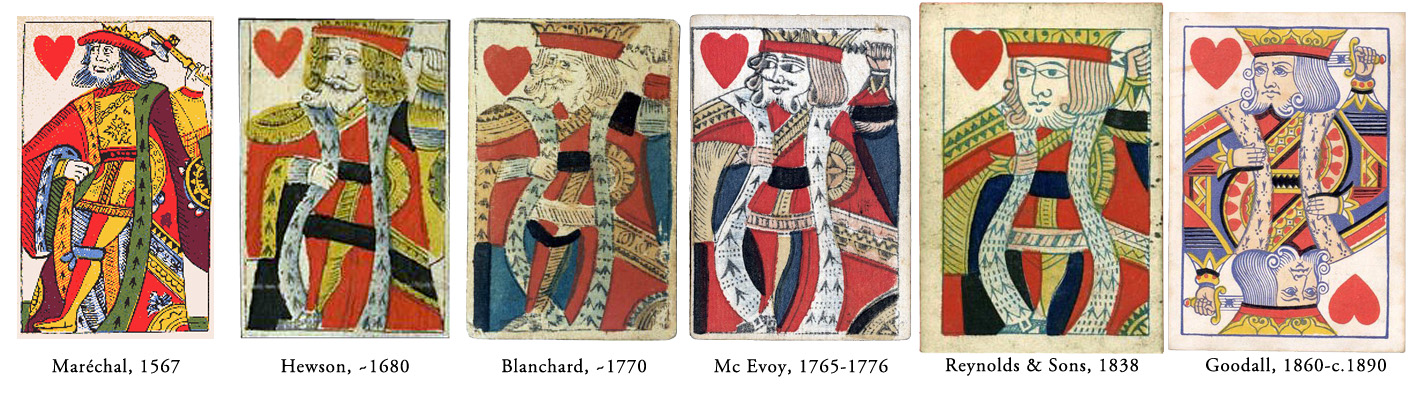
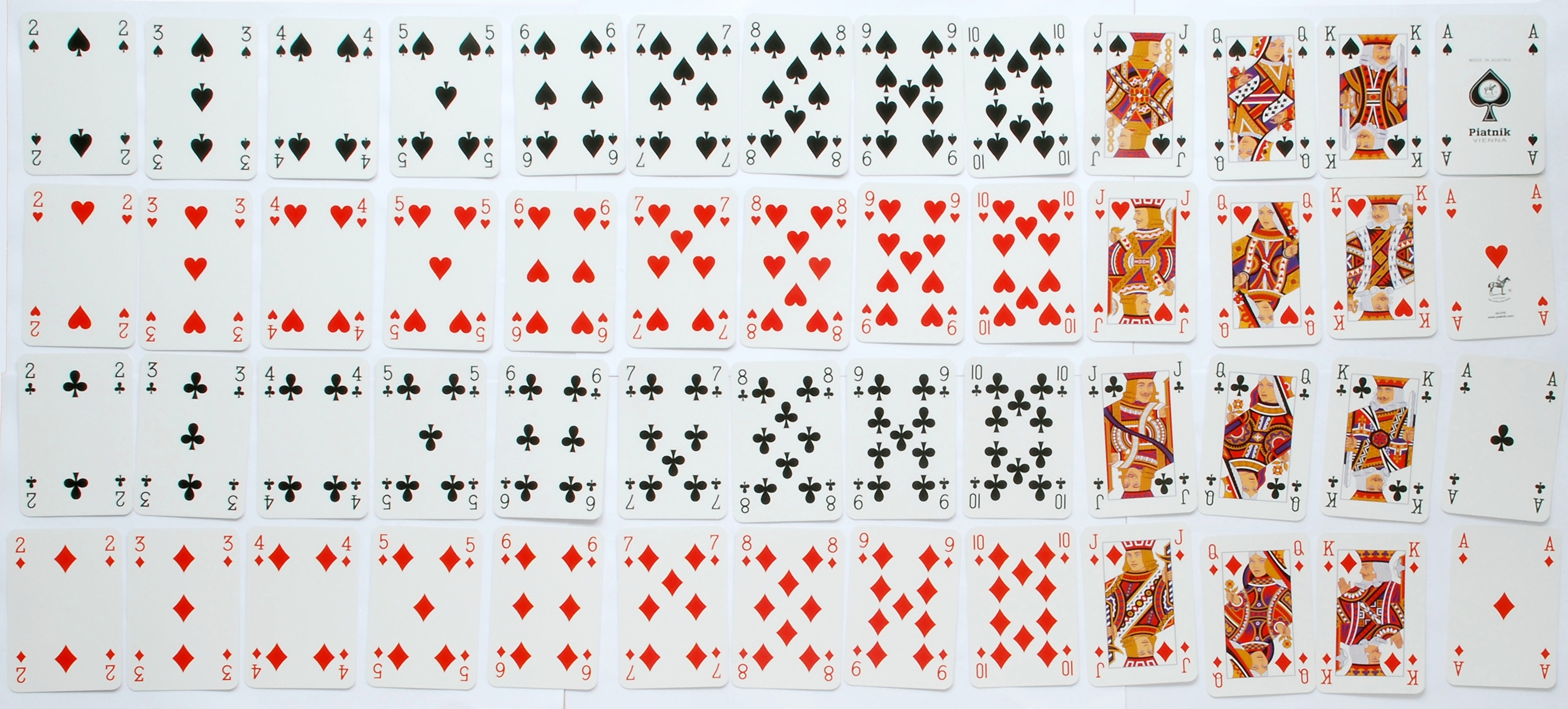
We're talking about playing cards, and the fact that the Ace (Photo by VV94), nominally low, since it represents the number One, in many if not most games is the high card of all 12 other cards of its suit and of all cards in the deck. But why should lowly one-point aces beat out all other cards? I find now that for that, you have to look at the French Revolution.
But oddly, a while ago, we discovered something else unexpectedly connected to the French Revolution, the evolution of right-hand traffic. This was fully discussed in 2013/15, and was one of those things that filled the entire posting. I'll quote the relevant part:
| | | | | | France, like everywhere else [in Europe], had ridden on the left, but pre-revolutionary France had its notorious "Let 'em eat cake" aristocracy, and the custom developed for peasants to move out of the way—to the right—to give aristocrats the right-of-way and let them pass, even if that meant the peasants would face oncoming traffic. Eventually this became a requirement ordered by the French Crown. . . . As the left side of the road became a place for most people to avoid, the right side became more commonly used. And then came the Revolution in 1789, after which any aristocrats who still had their heads on their shoulders chose to keep a low profile and travel on the right with the peasants. With everyone on the right, that also become codified in France in the early 1790s when a RHT [right-hand traffic] decree came out . . . |
| | | | The second momentous event of the period was the rise of Napoléon in 1804 (to 1815). His conquests across the continent spread French RHT to countries both occupied by him and allied to him. He famously never made it to the British Isles after Waterloo, and so RHT never made it there (nor to British colonies).
Now back to card games. As far back as the 15C-16C, some games went topsy-turvy and began using the Ace, representing the number One, the low man on the totem pole, as the top card. In the 17C and early 18C, this spread to other games. For instance, Edmond Hoyle’s 1742 treatise on Whist clearly shows that the Ace ranked above the King at that time. However, popularization of Ace-High games greatly increased at the time of the French Revolution in 1789 as a symbol of common man rising above royalty. It was the spirit of the times, Everyman becoming more powerful than the King himself. But why should the ace-high concept in France affect other countries? See "National Decks" below. Back to the Ace itself.
In practice, there are three possibilities for the Ace. In Cribbage, the Ace is always low, worth one point. In Hearts, the Ace is always high. But most interesting are the cases where the Ace can be either, usually at the player's will. A straight in Poker can have the Ace either low or high: A2345 or AKQJ10.
One thing about research is that it grows as you do it. You look up one gold nugget, then find other gold nuggets with it. Here are several I found.
BLACKJACK In this last category where the Ace is either high or low we have Blackjack, a member of a family of card games called Twenty-One. In it, the Ace counts either as 11 or 1. It counts as 11 up until it might cause a player's points to "bust" (go over 21), after which it will count in that hand as 1. But if the Ace teams up with a ten-point card (10, J, Q, K), the total of 21 is a natural Blackjack, and the player wins. But if you consider the ace-high history, Everyman teaming up with Royalty is indeed an odd combination.
The name Blackjack doesn't seem to make any sense, tho there is a popular story about it. It's since been debunked, but remains a fun story nevertheless.
According to popular myth, when the game was introduced in the US way in the past, casinos offered players an extra-special deal to stimulate interest in the game. It was a bonus of a ten-to-one payout if the player's winning hand consisted specifically of the ace of spades and a black jack, either the jack of clubs or the jack of spades. This special bonus hand was called for obvious reasons a "blackjack". Eventually, the ten-to-one bonus was withdrawn, but the name stuck. Again, it's a great story, but it might be just a myth.
NATIONAL DECKS I suspect most people are unaware of the history of playing cards as being, to a large extent, quite local and nation-based, and the size of decks of cards can vary. I've been aware of two, French-suited cards and German-suited cards, and now find there are others.
The most common pack of playing cards used today is the standard 52-card deck of French-suited playing cards, but in the English pattern, also called the Anglo-American or International pattern, based on an early pattern from Rouen in France. The following shows the evolution of the King of Hearts. The first one, from 1567, is from Rouen, while all the rest are English. In English-speaking countries it's the only traditional pack used for playing cards. In many countries, however, depending on the game being played, it's used alongside other traditional standard packs with different suit systems and different total number of cards, such as those with German-, Italian-, Spanish- or Swiss suits. We shall NOT go into details about the other national suits.
English This is the standard International pack (Photo by Trainler) using French suit symbols, but set up for English speakers with K, Q, J for the picture cards.
https://c8.alamy.com/comp/BB1J29/playing-cards-of-a-french-deck-dame-roi-and-valet-corresponding-to-BB1J29.jpg
French Compare that with an international pack (above) using French suit symbols, but set up with French names for the picture cards. We have R for Roi (King), D for Dame ([one syllable] Lady), and V for Valet. Note that in French, it is not specified that the Lady is a queen—she is just a woman of high standing, probably at court. Traditionally, a valet was a squire, or an equerry, which was an officer in the royal household attending to one of the royals.
https://c8.alamy.com/compde/f379yr/deutsche-spielkarten-konigin-der-herzen-bube-konig-f379yr.jpg
German Above are cards from an international pack using French suit symbols, but set up with German names for the picture cards. These are K for König (King), D for Dame ([two syllables] Lady), and B for Bube. Traditionally, Bube simply meant "boy", but today, Junge has taken over that meaning, while Knabe is more restricted to German Switzerland. Bube also took on pejorative meaning as in Spitzbube (rascal, rogue), or shortened in Lausbub with the same meaning. However, the diminutive Bubi is a term of endearment. As for the playing card, Bube again indicates a squire, also the lowest rank of knights.
Russian It's fun to include Russian cards here, mainly because of the alphabet. We have К (just a squiggle different from Latin K) for король (ka.ROL'), King. We have Д (D) for дама (DA.ma), Lady. Is it from French or German? I'd say indirectly from French, but the French word has only one syllable; it has to have come via the German version, which has two syllables, as does the Russian word. Don't be tricked by the В (V) for валет (va.LYET), clearly taken directly from French (tho pronouncing the T).
It's worth noting here that, of these four varieties, only English declares that the lady is a Queen, so that the King & Queen form a royal couple, while the Jack is an interloper of lower status. But in the other three examples, the King stands alone as the only royal, with the lady and gentleman forming a secondary grouping.
SPADES HIGH In most games, notably Bridge, Spades is the highest suit. Why? A "spade" in cards is not a shovel. The word entered English in the 1590s, probably from Italian spade, plural of spada (sword) representing military power, and thus came to the fore.
JACK In the English-language deck, the Jack pictures a man in the traditional or historic aristocratic or courtier dress generally associated with Europe of the 16th or 17th century. As early as the mid-1500s, the card was known in England as the knave, which originally meant "boy or young man", as its German equivalent, Knabe, still does. In the context of a royal household, it meant a male servant without a specific role or skill; nothing precise such as a cook, gardener, or coachman.
But in the 19C, letters were added to the corners of the picture cards, and using Kn for knave, with its idiotic "silent" K, looked confusing, because K stood for King. This is when J for Jack appeared instead. While kings and queens are royalty, the Jack represents a courtier, knight, or servant in the royal household.
"Jack" was a common slang term for a man or servant in the 16C and 17C used for male personifications and referring to any generic man or fellow. The name still appears in a variety of words, such as a woodcutter being called a Lumberjack or one who climbs steeples to make repairs being called a Steeplejack. Since the 1610s we have a handy person being called a Jack-of-all-trades; as of 1826, another personification of Old Man Winter has been Jack Frost. The child's toy is called a Jack-in-the-box. Jack o'Lantern derives from a Jack with a Lantern. There is also a plant called the Jack-in-the-Pulpit (Photo by Francesco Scelsa).
| | | |
| |
|
|
|